 For those of you who aren’t on Twitter—and maybe even for some of you who are—you’ve probably seen posts on LinkedIn, Facebook and other social media sites along the lines of: “Looking forward to getting #nachos and a #beer tonight at the #Colorado #Rockies game.”
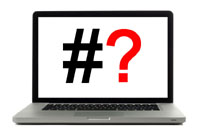
You’ve probably thought: “What’s with the # symbol?”
In the world of Twitter, the “#” symbol is called a hashtag and is used to mark topics or keywords. Twitter users can read the stream of Tweets using a specific hashtag.
The “inventor” of the hashtag is Chris Messina. On August 23, 2007, Chris suggested—in a Tweet, of course—using a hashtag to make postings about a group easier to find. Hashtags quickly caught on and Twitter now estimates that at least 11% of all Tweets contain a hashtag. Approximately 140 million Tweets are sent every day, so that means that every day, over 15 million Tweets contain at least one hashtag.
Personally, I think the use of hashtags has gotten out of hand. Many of the people I follow on Twitter can’t send a Tweet without at least one. I did a quick review and found several Tweets in just a short span of time that contained five or more hashtags—that’s a lot of hashtags in just 140 characters!
Hashtags can be very beneficial, especially when they pertain to an event, speaker or presentation. Recently, I attended an event that featured the fabulous Bob Burg. Attendees were asked to post on Twitter about his presentation, using the hashtag #BTM.
For a while, I was feverishly taking notes, until I realized that what I thought was important others would, too—and they’d be Tweeting about it. So, I focused on just listening to Bob’s presentation. When I checked the hashtag later, most of his important points were there.
It can be rather disconcerting if you’re the speaker and people are typing away on their smart phones. You could be thinking “Wow! They must really like what I’m saying!” or “Uh-oh. Maybe they’re posting that I’m an idiot.” Maybe they’re checking their email or the latest baseball score. However, many people are going to do it, so embrace it and encourage people to post by telling them the hashtag you want them to use.
Hashtags are also great at conferences that have concurrent sessions. You can attend one session, but get the highlights from simultaneous sessions by reading the hashtag.
I encourage you to use hashtags on Twitter—but within moderation. If you wouldn’t go to the stream to follow it, then don’t use it in your post. It’s also very confusing when you have your Twitter posts feed into LinkedIn or Facebook as they don’t always make sense.
Do you use hashtags? How often? What are your thoughts on them?
One last thing—you can always find reposts of my blog by going to the hashtag #debblog!

Deb–This is a great explanation of the hashtag. I knew what they were, but not how and why to use them. Thanks!
-Karen
Thanks! Hashtags have their use…but they can definitely be confusing!
Thank you for the remarks about hashtags. Personally I get a little tired of them popping up on Facebook and LinkedIn. I’m not a big user of them and would also like to see them used more judiciously!
Susan – thanks for commenting! I saw someone’s Tweet the other day were every single word was a hashtag. Confusing enough to read it on Twitter – next to impossible to understand if you’re reading it on Facebook or LinkedIn.
Great info here, Deb! #Thanks! 😉